KIG: the classification that decides whether costs are covered
Five grades, one measurement – and the answer to the most expensive question.
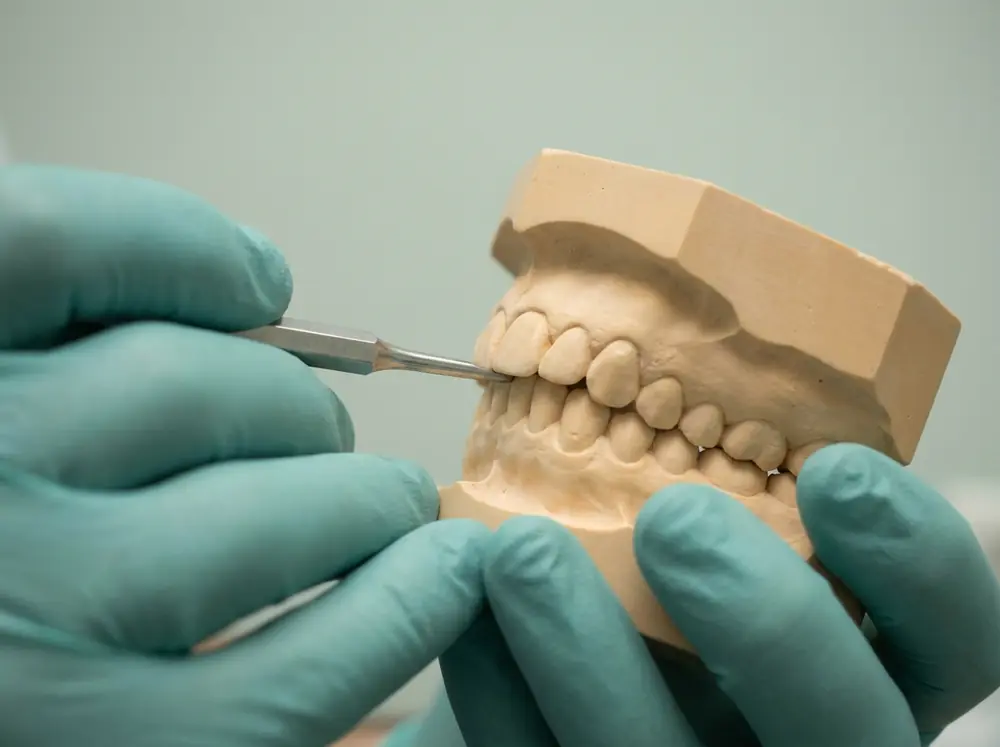
Whether statutory health insurance covers orthodontic treatment does not depend on how crooked the teeth look, but on a classification: the orthodontic indication groups, known as KIG. They were introduced to draw a measurable line between medical necessity and aesthetic preference.
How the grading works
The orthodontist measures the findings – in millimetres, not by impression. Among the things measured are the overjet, the lack of space, the depth of the bite and the deviation in how the back teeth interlock. The most severe single finding determines the grade.
The five grades
Grade 1 stands for a mild malocclusion, grade 5 for an extremely pronounced one. From grade 3 statutory health insurance covers the treatment; grades 1 and 2 are not considered in need of treatment in the insurance sense and must be paid for privately.
What this means in practice
A child with clearly visible crowding can fall into grade 2 if the lack of space is under three millimetres – and then have to pay for the treatment out of pocket. Conversely, an inconspicuous but deeply interlocked bite may well fall into grade 3. The classification is not negotiable; it is submitted to the insurance fund together with the treatment plan and reviewed there.
Source: guidelines of the German Federal Joint Committee (Gemeinsamer Bundesausschuss) on orthodontic treatment.
The essentials at a glance
- KIG stands for the German orthodontic indication groups – five grades from mild to extremely pronounced.
- Measurement is in millimetres, not by impression. The most severe single finding determines the grade.
- From grade 3, statutory health insurance pays. Grades 1 and 2 must be paid for privately.
- Visibly crooked and in need of treatment in the insurance sense are not the same thing – which surprises many parents.
Answered briefly
Frequently asked questions
The orthodontist, based on the measurements of models and X-rays. The classification goes to the health insurance together with the treatment plan, which reviews it – in some cases through the Medical Service (Medizinischer Dienst).
Against the insurance's rejection, yes. This makes sense if findings were not taken into account or the condition has changed. The measured values themselves, however, are determined objectively and do not change through an appeal.
Then the treatment has to be paid privately. Ask what consequences are to be expected without treatment – with some findings they are minor, with others not. And have the classification redone after one to two years: during growth the findings can shift.
No. For adults, statutory health insurance does not pay as a matter of principle, regardless of severity. The exception is severe jaw misalignments that are treated jointly by orthodontics and surgery.