Braces: which types exist and what they are good for
Fixed, removable, invisible – the choice depends on the findings, not on taste alone.
A brace moves teeth by exerting constant light pressure. All designs do this; they differ in how precisely they can guide individual teeth and how much cooperation they demand.
The three basic types
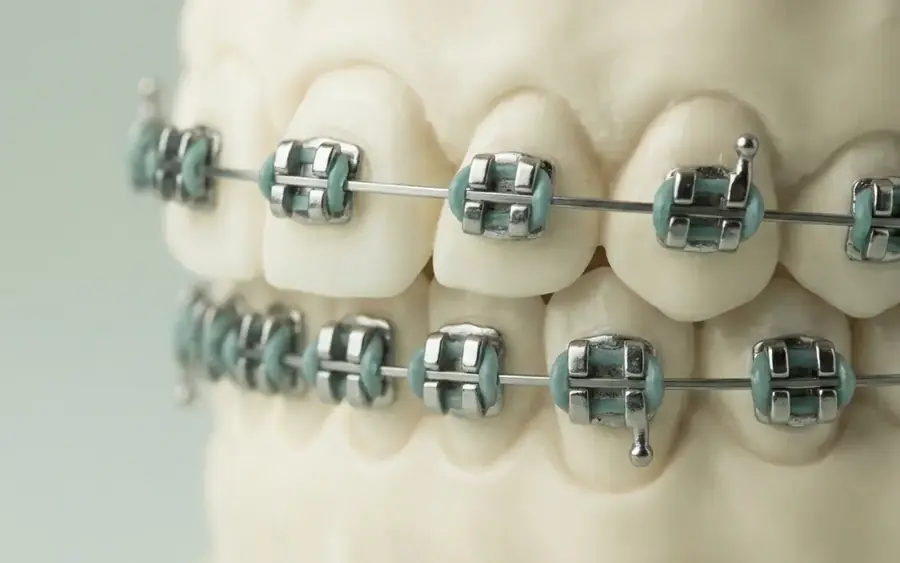
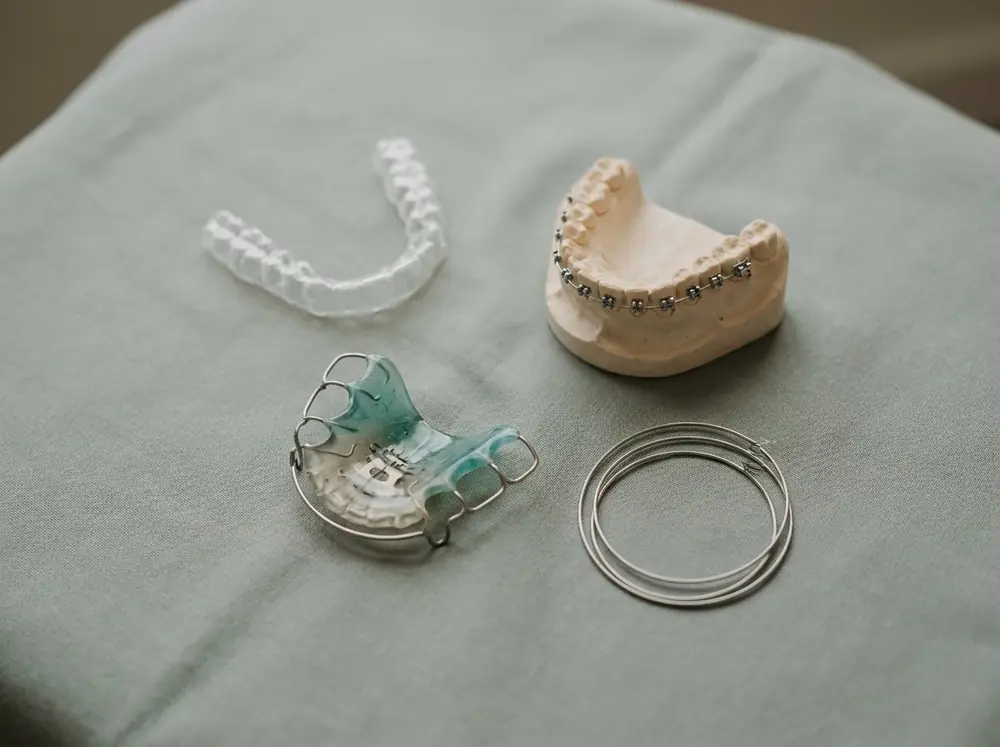
Fixed braces are bonded to the teeth and work around the clock. They can move any tooth in all three spatial directions and are therefore the first choice for complex malocclusions.
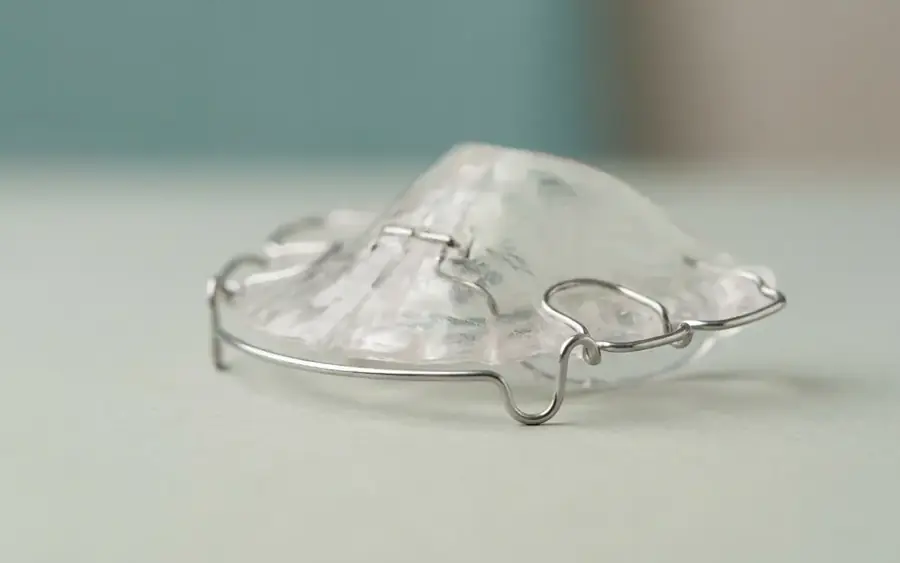
Removable braces only work while they are being worn. They are suitable for guiding the jaw during growth, creating space or holding a result – individual teeth can only be controlled with them to a limited extent.
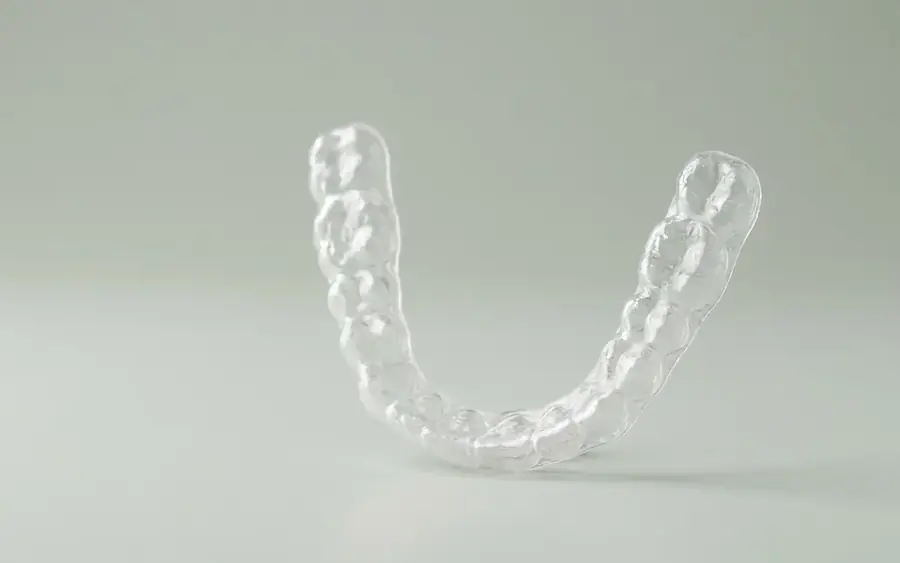
Aligners, that is, transparent trays, are a special form of removable appliance. They are barely visible and are changed every one to two weeks. Their limits lie where teeth have to be rotated or moved vertically.
What decides in the end
The design follows the findings. Only when several approaches are professionally justifiable do visibility, wearing comfort and cost come into play. Anyone who goes into the consultation with a fixed wish should be prepared to hear what can be achieved with it – and what cannot.
Designs
The designs at a glance
It is not the brace that determines the result, but whether it suits the findings – and whether it is worn.
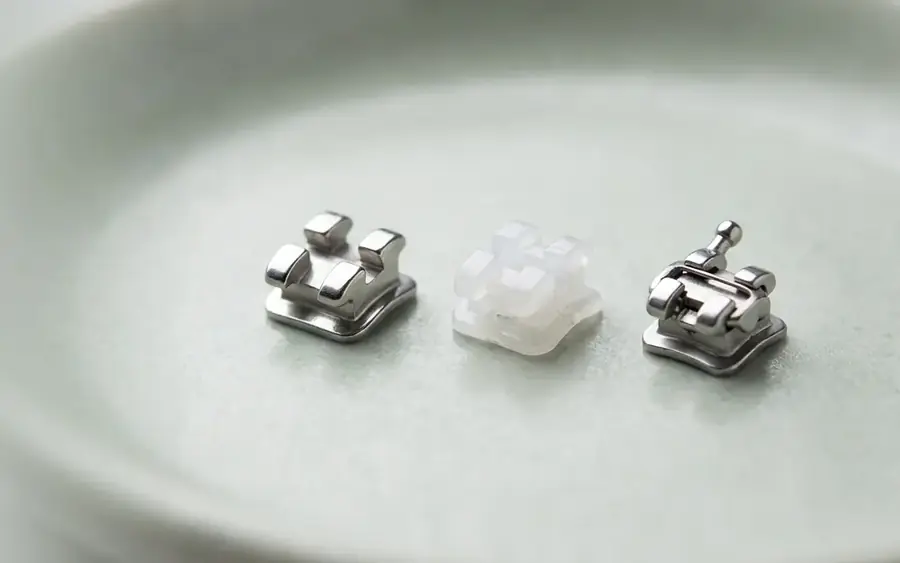
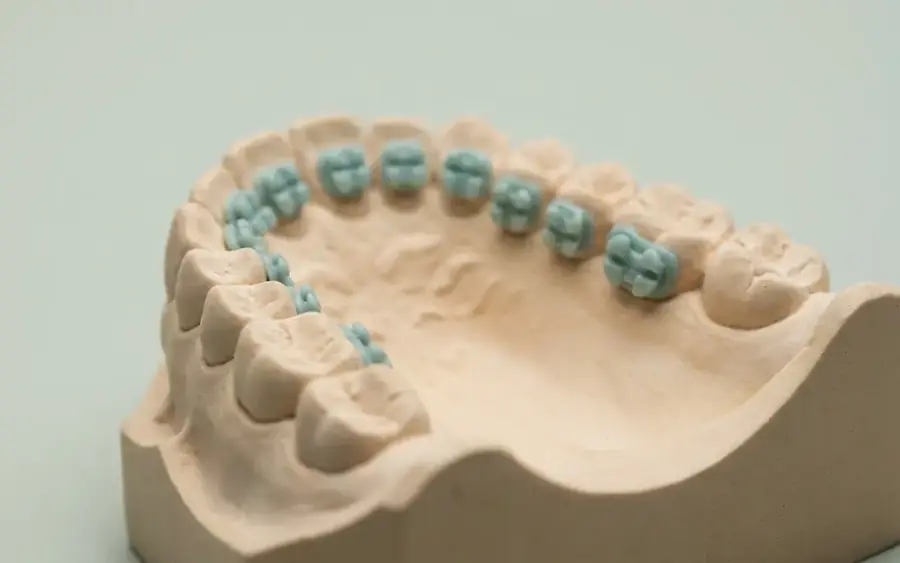
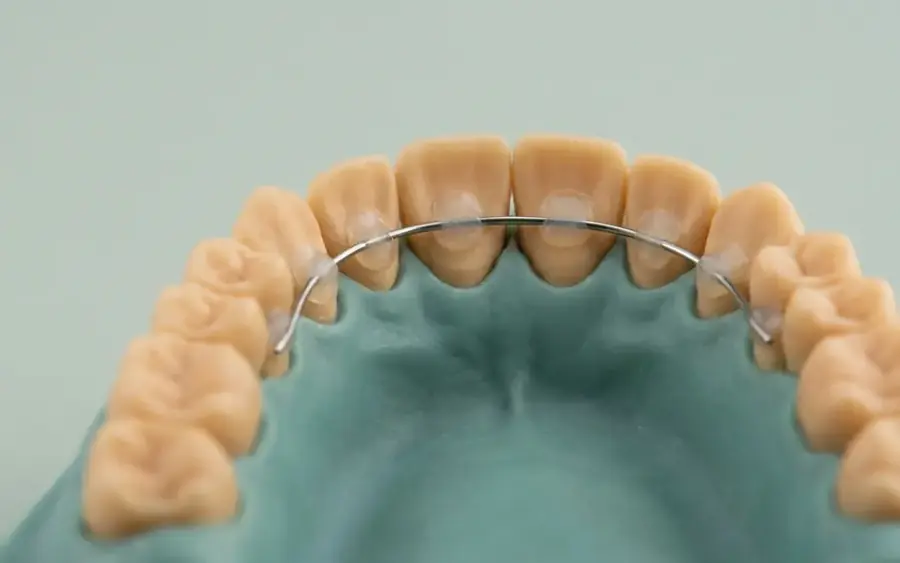
The key facts at a glance
- Every brace works the same way: constant light pressure. The difference lies in how precisely it guides and how much cooperation it demands.
- Fixed braces work around the clock and can move any tooth in all directions – for complex malocclusions they are the first choice.
- Removable appliances mainly guide jaw growth and create space. They control individual teeth only to a limited extent.
- Aligners are barely visible, but reach their limits when teeth have to be rotated or moved vertically.
Answered briefly
Frequently asked questions
The one that fits the findings. There is no design that is superior to all others. With pronounced misalignments there is usually no way around a fixed brace; for minor corrections in the front area, aligners come into consideration; during growth, a removable appliance guides the jaw.
Within limits. If several approaches are professionally justifiable, you have a say. If only one is suitable, the practice should say so clearly – and give reasons. Ask them to explain what can be achieved with the method you prefer and what cannot.
Depending on the extent of the correction, one to three years. This is followed by stabilisation with a retainer, and that takes considerably longer – often permanently.
No. Lingually bonded brackets sit on the inside of the teeth and are invisible from the outside. Aligners are barely noticeable in conversation. Both options are more expensive than the classic fixed brace on the outside.