Orthodontics: when it is needed and what it does
The specialty that brings teeth and jaws into the right position – and the question of when that is necessary.
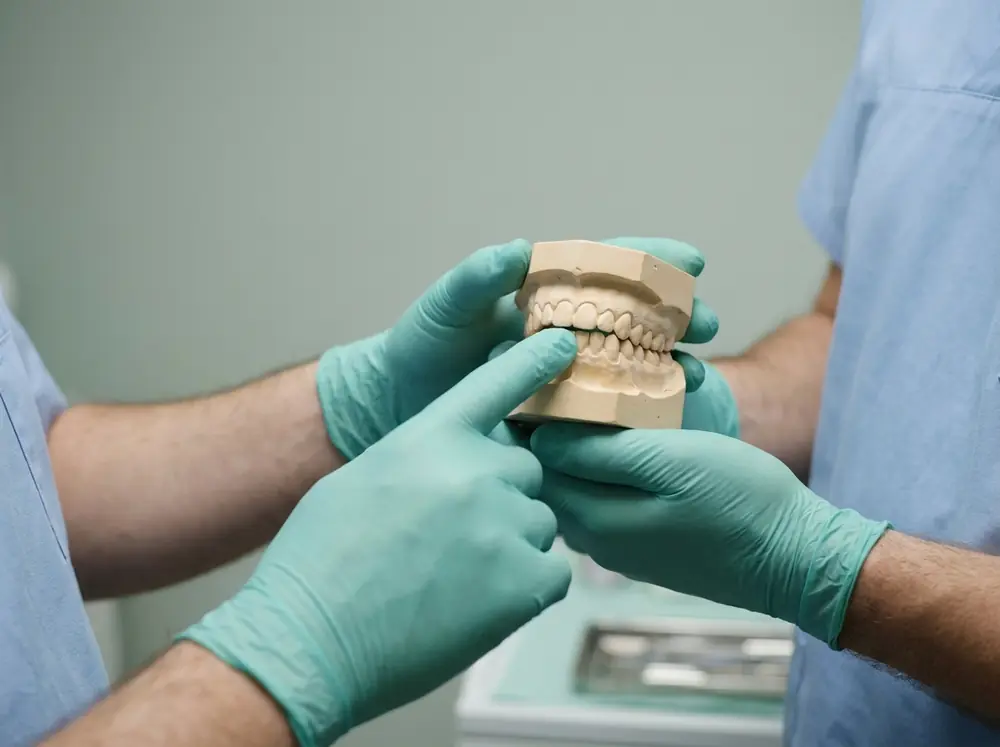
Orthodontics deals with the position of the teeth and the way the jaws relate to each other. It moves teeth by gentle, sustained pressure: the bone breaks down on the pressure side and builds up again on the tension side. That is why every treatment takes months to years – it cannot go faster without damaging the tooth.
When treatment is needed
Not every crooked row of teeth needs treatment. A correction is medically justified when the malocclusion impairs chewing, speaking or breathing, when individual teeth are permanently overloaded, or when oral hygiene becomes so difficult that tooth decay and gum inflammation threaten.
Then there is the aesthetic wish. It is legitimate, but it is not covered by statutory health insurance. The distinction is not hair-splitting: it decides who pays.
Who provides treatment
An orthodontist is a dentist with three years of further training as a specialist in orthodontics. The title is protected. Dentists also offer orthodontic services within their own practice – that is permitted, but not the same thing. If in doubt, ask about the specialist training.
What this portal is
The KFO-Berater explains malocclusions, treatment options, costs and procedures – independently and free of advertising. It does not replace an examination: which treatment is right for you only follows from the findings.
The key facts at a glance
- Orthodontics moves teeth by sustained, gentle pressure – the bone remodels in the process. That takes months to years.
- Treatment is medically necessary when chewing, speaking, breathing or oral hygiene suffer. The mere wish for straight teeth does not count.
- Becoming a specialist in orthodontics takes three years of further training after dental school. The title is protected.
- Whether statutory health insurance pays is decided by the classification into the KIG (German orthodontic indication groups), not by appearance.
Answered briefly
Frequently asked questions
The first examination makes sense once the permanent incisors and the first permanent molars are in place – usually at eight to nine years of age. With unusual jaw growth or a crossbite it can be worthwhile much earlier, sometimes as early as the primary dentition.
Yes. Teeth can be moved at any age, as long as the gums are healthy and enough bone is present. The difference from a child: in adults jaw growth is complete, so growth can no longer be guided. Purely jaw-related misalignments may then require surgery.
For diagnosis and treatment planning, the specialist orthodontist. The ongoing monitoring of caries and gums remains with your family dentist – both are especially important during treatment with a brace.
The fitting itself does not. In the first days afterwards and after each adjustment the teeth are sensitive to pressure; many describe it as a pulling sensation when biting. This subsides after a few days. Persistent pain is not a normal part of treatment and should be looked into.