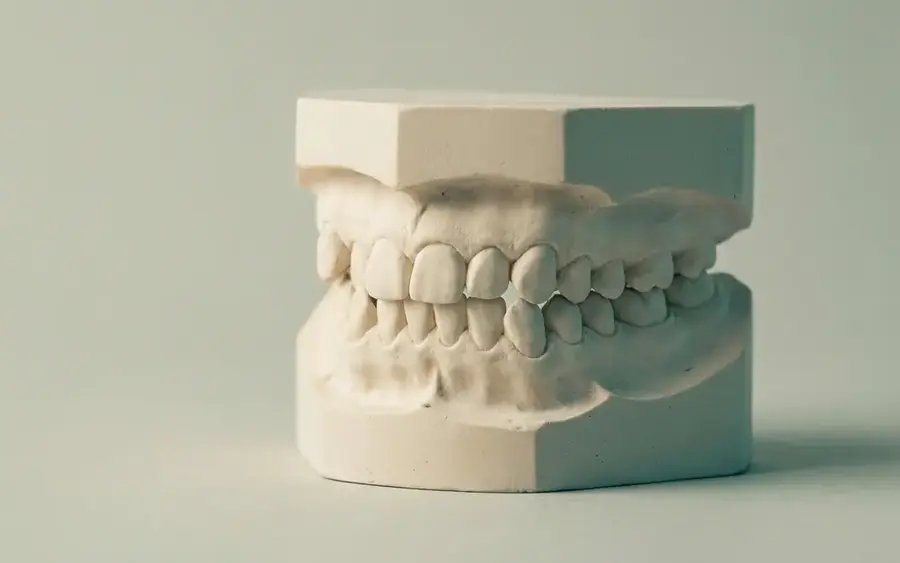
Misaligned teeth
Overbite, underbite, crossbite, open bite, deep bite, crowding: which deviation is present decides the effort, the timing and the cost.
More on thisWhich malocclusions need to be treated, which brace suits when – and what statutory health insurance covers.
Orthodontics moves teeth and jaws into a position in which they meet cleanly. That is not a question of appearance alone: a bite that does not fit overloads individual teeth, makes cleaning harder and can affect the jaw joint and speech. Treatment therefore follows the findings, not a wish.
A tooth is always moved in the same way: light, sustained pressure, upon which bone is broken down on the pressure side and built up again on the tension side. That takes time and cannot be hurried. What produces the pressure – fixed braces, a removable plate or an aligner – is decided by the findings.
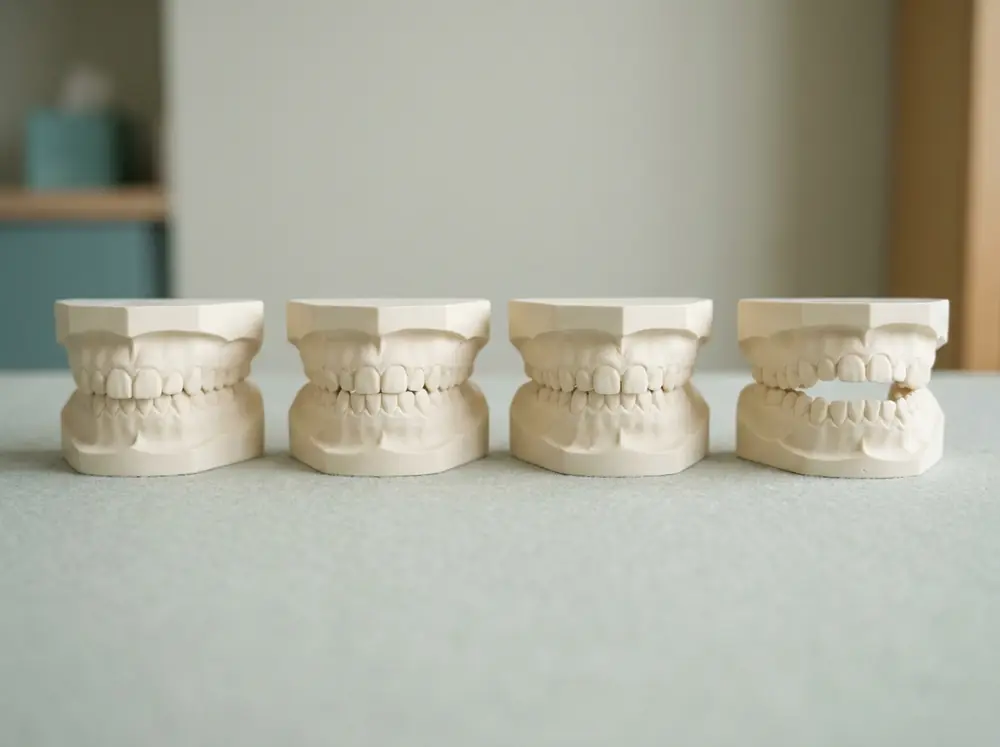
Not every irregularity has to be treated. These observations, though, are reason to take a look:
As long as the jaw is growing, that growth can be worked with – it is the most effective tool orthodontics has, and it costs nothing. The professional bodies therefore recommend a first check-up between the ages of seven and nine. In most cases the result is: keep watching, come back in a year. That is precisely the point of the appointment.
In adults this growth is absent. Teeth can still be moved at any age; only changes to the position of the jaw are then possible by surgery alone. And whatever the age: once the braces come off, a retainer holds the result – without it the teeth drift back.
Frequently searched
 Is it really necessary?When treatment is due and when waiting is the better choice.
 Which misalignment is it?Overbite, crossbite, crowding – the six most common.
 How does it work?From the first appointment to the retainer.
 What does the health insurer pay?KIG levels, your own share and private extras.
 Who treats this?Orthodontic practices near you.
Overbite, underbite, crossbite, open bite, deep bite, crowding: which deviation is present decides the effort, the timing and the cost.
More on this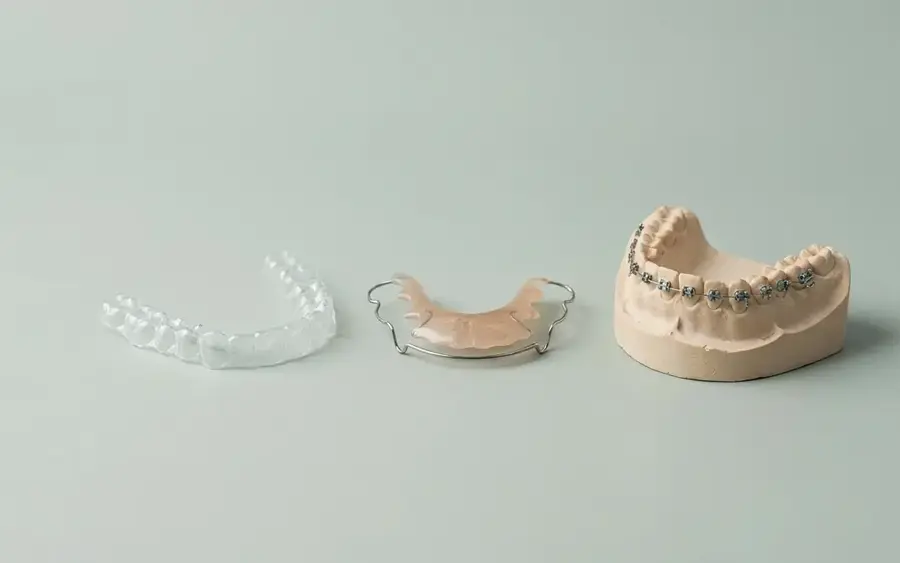
Fixed braces, a removable plate or a clear aligner – it is not the design that decides the result, but whether it suits the findings and is actually worn.
More on this
Statutory health insurance pays for children from KIG level 3 – but at first only 80 per cent. What that means and what comes on top privately.
More on thisYou can find more current news here!
08.09.2026
That wisdom teeth push the front teeth is the best-known unproven claim in dentistry.
Weiterlesen →11.08.2026
Not every clicking comes from the teeth, and not every brace makes it go away.
Weiterlesen →09.06.2026
The digital impression has arrived in orthodontics – and it changes more than comfort.
Weiterlesen →Practice website by dentalspezialisten.de
Here and in four further specialist portals, as long as your website runs with us – whether rented or bought. Texts, images, technology and upkeep are ours.
The same website as with the rental – you pay for it once instead of monthly.
Three finished drafts, in your inbox within 48 hours – free of charge and without obligation
You get in touch if you like one of them – not the other way round.
We use your details only for the drafts – see the privacy notice for more.
We do not call youNo appointmentNo obligation
Answered briefly
That is decided by the findings, not by appearance. Treatment is given when the malocclusion has consequences or will foreseeably have them – overloaded teeth, worn-down edges, areas that cannot be cleaned, or a bite that forces the jaw joint. Ask to have the classification explained to you.
For children and adolescents with a pronounced malocclusion, statutory health insurance covers the treatment; you advance 20 percent and get it back after successful completion. For minor misalignments and for adults, the treatment has to be paid privately. The figure only becomes reliable with the written cost plan.
Yes – with aligners or with brackets bonded on the inside. Both are more expensive than the classic fixed brace and not suitable for every case. What is possible in your case is determined by the examination.
One to three years of active treatment, depending on the extent. This is followed by stabilisation with a retainer, which accompanies many people permanently.
The KFO-Berater is an independent information portal for patients – without advertising, and none of these pages replaces an examination. Under News you will find current reports, under FAQs the short answers. Gums and bone loss are covered by the Parodontologie-Berater, dental implants by the Implantat-Berater.