Early treatment: when treatment before the change of teeth makes sense
The exception, not the rule – with clear reasons.
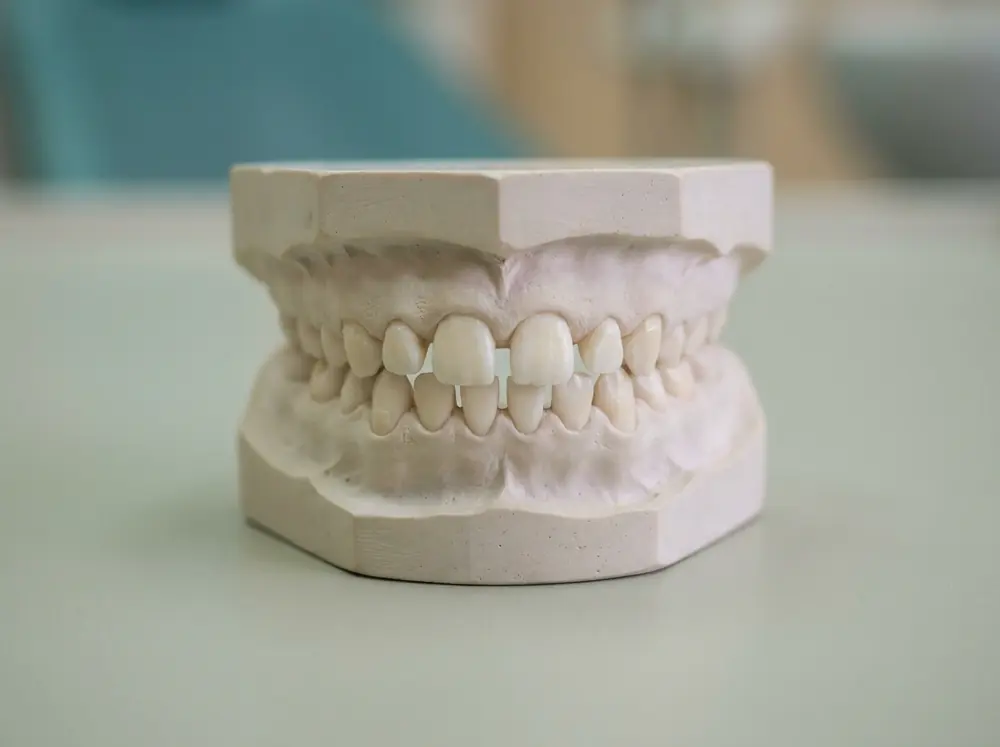
Early treatment means an orthodontic measure before the age of eight, that is, in the primary dentition or the early mixed dentition. It is the exception. The rule is to observe development and to treat at around nine to eleven years of age.
The reasons
A crossbite, because the lower jaw deviates when biting and puts one-sided strain on the joint. An underbite, because it intensifies with growth. A greatly increased overbite, because protruding incisors break in falls. An open bite caused by sucking habits, as long as the cause can still be stopped. And a lack of space that prevents a permanent tooth from erupting.
What speaks against early treatment
It usually does not replace the later treatment but comes in addition to it. For the child, that means more years with an appliance – and compliance is even harder to ask of a child of primary-school age than of a teenager. Where there is no clear reason, waiting is the better decision.
What it can achieve
Where it is indicated, it makes the difference: a crossbite resolved early prevents asymmetric development. An underbite guided early can avoid later surgery. These are not cosmetic advantages but lasting ones.
The essentials at a glance
- Early treatment means: before the age of eight. It is the exception, not the rule.
- Clear reasons are crossbite, underbite, strongly protruding incisors, an open bite caused by sucking, and eruption disorders.
- It usually does not replace the later treatment but comes in addition – more years with an appliance for the child.
- Where it is indicated, it prevents lasting consequences: asymmetric growth, later operations.
Answered briefly
Frequently asked questions
No. Without a clear indication it only prolongs the overall duration. The benefit is limited to certain findings – for those, however, it is considerable.
For the recognised indications yes, independently of the later main treatment. The classification is made as usual via the KIG (German orthodontic indication groups).
Usually six to eighteen months. This is generally followed by an observation phase until the change of teeth is complete, and only then is it decided whether a main treatment becomes necessary.
Yes, if there is an indication – for instance a crossbite. Without one it is not sensible. Ask for the reasons and for what happens if you wait instead.