Dental care with a fixed brace
The brace straightens the teeth. Whether they are healthy afterwards is decided by the brush.
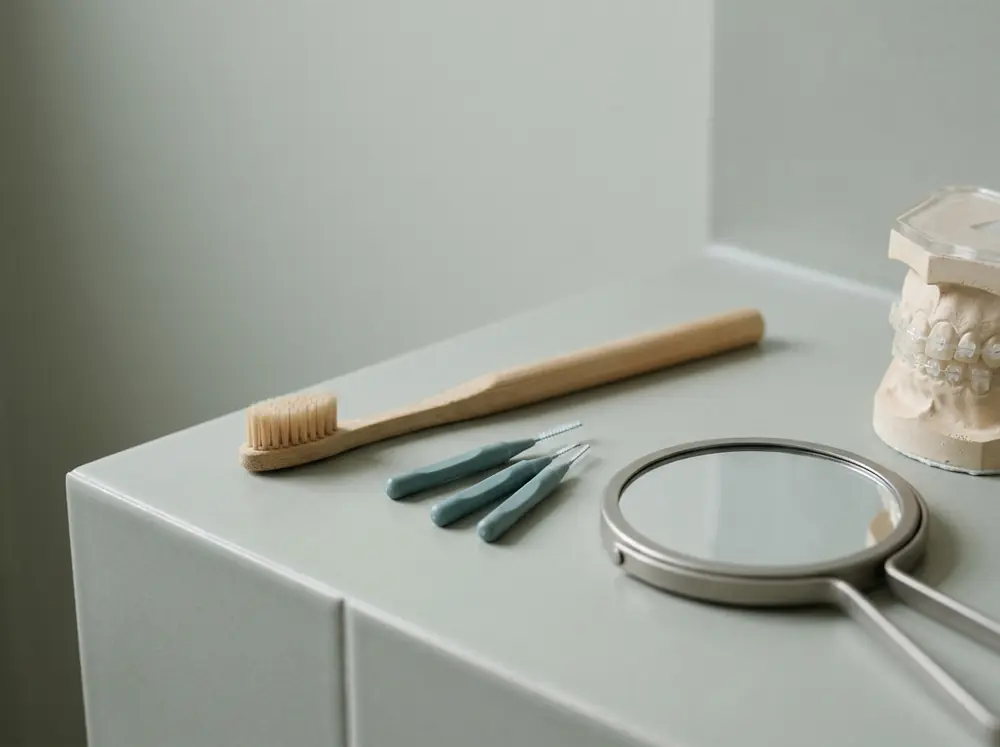
Brackets and archwire create niches that were not there before. Plaque left sitting there produces acids; the enamel around the bracket decalcifies. What remains when the brace is taken off are white spots – and they stay visible.
What you need
A soft toothbrush, or better an electric one with a small head. Interdental brushes for under the archwire and between the brackets – they matter more here than with healthy teeth, because dental floss fails at the archwire. A single-tuft brush for the edge of the bracket. And fluoride: a toothpaste with a higher content or a gel once a week.
The order
First the chewing surfaces, then the outer surfaces above the archwire, then below it, then the inner surfaces. Go around each bracket individually. Then use the small brush under the archwire. This takes longer than usual – three minutes are the minimum, five are realistic.
The check-ups
Keep regular appointments with your family dentist, not only with the orthodontist – the latter checks the position of the teeth, not the teeth themselves. Professional dental cleaning at longer intervals makes sense during the time with a brace; more on this at the Parodontologie-Berater.
The essentials at a glance
- Plaque around brackets decalcifies the enamel. The white spots this creates remain visible after the brace comes off.
- Interdental brushes matter more here than dental floss – floss fails at the archwire.
- Fluoride helps: a toothpaste with a higher content or a gel once a week.
- The orthodontist checks the position of the teeth, not the teeth themselves. Check-ups with your family dentist remain necessary.
Answered briefly
Frequently asked questions
Three minutes is the minimum, five is more realistic. The time required increases because every bracket has to be cleaned around individually and the area under the archwire needs its own attention.
Both work. An electric brush with a small head takes some of the work off you, but it does not replace the interdental brushes. More important than the device is that every surface is really reached.
They develop where plaque remains permanently: the enamel loses mineral. Some of it can be restored through fluoridation if you react early enough. Spots still present when the brace is removed usually remain visible.
Yes, at longer intervals. It reaches what is left behind at home and provides an opportunity to correct your brushing technique. It is a private service.