
Braces as an adult: what is possible and what is not
Teeth can be moved at any age. What can no longer be changed is jaw growth.

Age plays no role in moving a tooth. The bone remodels throughout life; a tooth can be moved at 50 just as at 15. What is missing is growth: the way the jaws relate to each other can no longer be guided.
What that means in practice
Crowding, rotated teeth, gaps, tilted teeth – all of this can be corrected well in adulthood. A true jaw misalignment, on the other hand, such as a distinctly undersized lower jaw, can only be repositioned surgically. Tooth position alone can mask it, not fix it.
The requirement that is too rarely talked about
Teeth can only be moved if their supporting structures are healthy. Untreated periodontitis rules treatment out: where bone is being broken down by inflammation, any force accelerates the loss. Before the brace, therefore, comes the examination of the gums – and, if necessary, treatment. In detail at the Parodontologie-Berater.
Crowns, bridges, implants
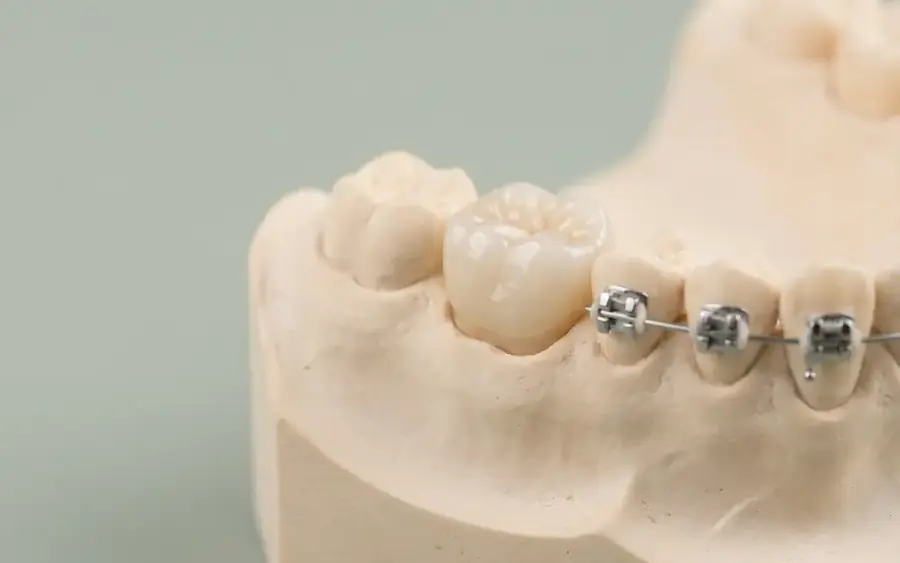
Crowned teeth can be moved; brackets adhere less well to ceramic than to enamel, but that can be solved. An implant, however, does not move – it is fused to the bone and at most serves as an anchor. Anyone planning tooth correction and considering an implant should settle the order beforehand: orthodontics first, then the implant. More at the Implantat-Berater.
Adults
What adults ask most often
Teeth can be moved at any age. The requirements are simply different from those for a child.

The key facts at a glance
- Teeth can be moved at any age. What is missing in adulthood is growth – the position of the jaws can no longer be guided.
- Crowding, rotations, gaps and tilted teeth can be corrected well. True jaw misalignments need a surgical procedure.
- Before any treatment comes an examination of the gums. Untreated periodontitis rules out tooth movement.
- An implant cannot be moved. Anyone planning both should settle the order beforehand: tooth position first, then the implant.
Answered briefly
Frequently asked questions
Medically yes, if the malocclusion has consequences – for instance overloading individual teeth or making cleaning difficult. Treatment tends to take somewhat longer in adults because bone remodelling is slower. The result is not affected by this.
As a rule, no. Statutory health insurance only covers orthodontic treatment up to the 18th birthday. The exception is severe jaw misalignments in which orthodontics and surgery have to be combined.
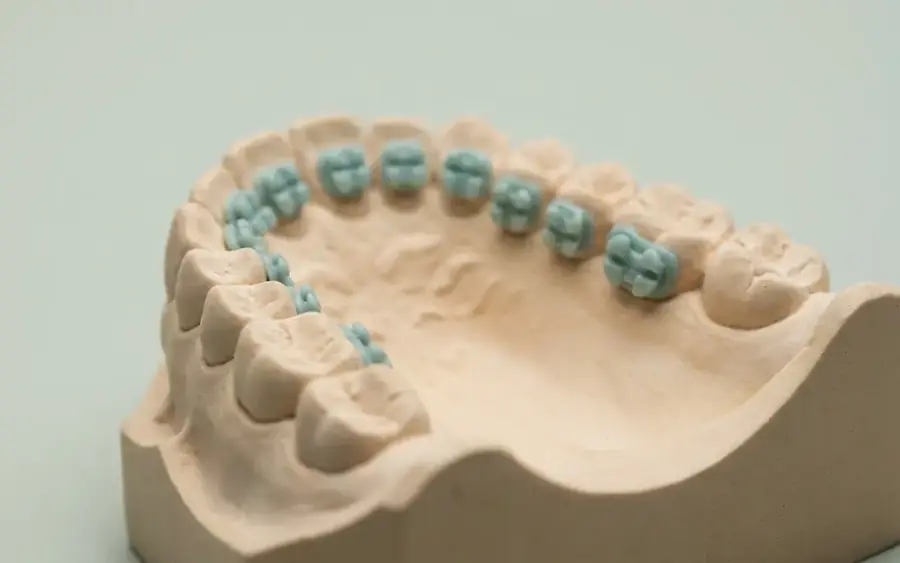
Yes, in two ways: with aligners or with brackets bonded on the inside. Both are more expensive than the classic fixed brace. Which option comes into consideration depends on how far the teeth need to be moved.
Usually not. Brackets adhere less well to ceramic than to enamel, but there are solutions for that. A bridge, however, rigidly connects several teeth – it might have to be separated beforehand. That belongs in the planning, not among the surprises.