Brackets: metal, ceramic or self-ligating
Small plates with a big difference in price.
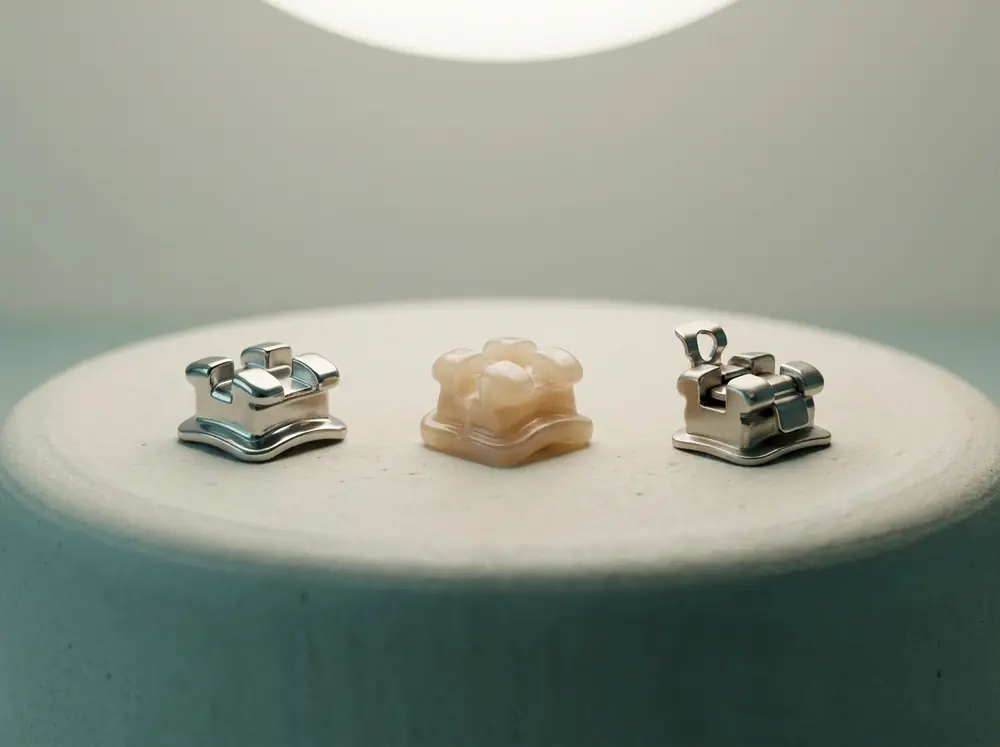
A bracket is the small plate that is bonded to the tooth and guides the archwire. Its design does not decide whether the treatment succeeds – but it does decide visibility, fragility and price.
Metal brackets
The standard care option. Small, flat, very sturdy, they slide well – and they are visible. They are the design most treatments run on, and the only one covered by statutory health insurance.
Ceramic brackets
Tooth-coloured and therefore much less noticeable. The price for this: they sit higher, are more brittle and break more easily, and the archwire slides less smoothly – which can lengthen the treatment somewhat. They are a private additional service.
Self-ligating brackets
They hold the archwire with a built-in clip instead of an elastic ring. That saves time at the appointment and does not trap any colour. Whether they really shorten treatment or cause less pain is a matter of professional debate – robust advantages have not been demonstrated so far.
What really counts
Not the bracket, but the planning behind it and the care in front of it. An expensive bracket on a poorly brushed tooth leaves the same white spot as a cheap one.
The essentials at a glance
- Metal brackets are standard care: small, sturdy, visible – and covered by statutory health insurance.
- Ceramic brackets are less noticeable, but sit higher, are more brittle and slide less smoothly. They have to be paid for privately.
- Self-ligating brackets save time in the chair. Robust advantages in duration or pain have not been demonstrated.
- The design does not decide the outcome. Planning and care do.
Answered briefly
Frequently asked questions
If visibility matters to you, yes – it is an aesthetic decision, not a medical one. Expect them to break more easily and the treatment possibly to take a little longer.
The brackets themselves hardly, but the elastic rings do – through coffee, tea, curry, red wine. They are changed at every appointment. Anyone who chooses self-ligating ceramic brackets avoids the problem.
They are charged per tooth; the amount is stated in the additional-cost agreement, which must be signed before treatment begins. Ask to be shown whether only the front teeth or all teeth are meant – many practices offer both.
Bonding and removal cost a very thin layer of enamel – that is harmless. What really causes damage is plaque that sits around the bracket for months.