How orthodontic treatment works
Four stages that build on one another – and one of them never quite ends.
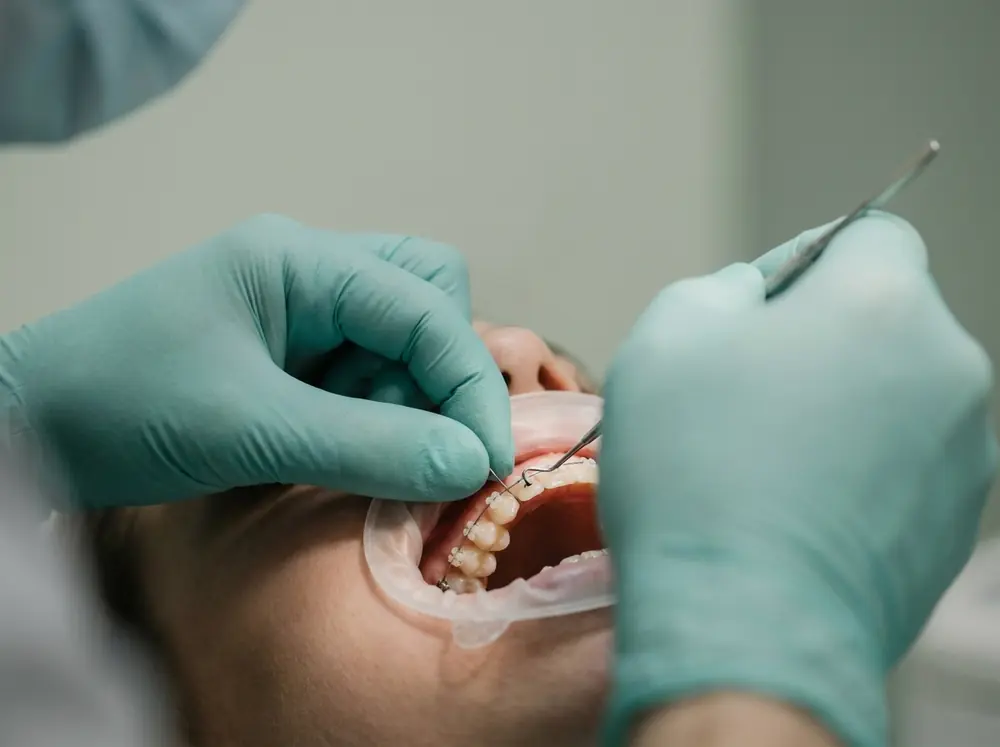
Orthodontic treatment proceeds in four stages: diagnosis, planning, active treatment, stabilization. The first takes a single session, the last essentially lasts a lifetime.
Diagnosis and planning
It begins with impressions or a digital scan, photos of the face and teeth, a panoramic X-ray and usually a lateral image of the skull. From these, the treatment plan is drawn up, with the KIG (German orthodontic indication groups) classification, the duration and the costs. It goes to the statutory health insurance and must be approved before treatment begins.
The active phase
Depending on the extent, one to three years. With a fixed brace, check-up appointments take place every four to eight weeks, with aligners somewhat less often. At each appointment the brace is adjusted – afterwards the teeth are sensitive to pressure for two or three days. That is intended: it is the sign that something is moving.
Stabilization
Once the brace is removed, the teeth stand in their new position, but the fibers of the periodontal apparatus remember the old one. Without a retainer they drift back – that is not the exception but the rule. Stabilization is therefore not an appendix to the treatment but its final part.
What changes in everyday life
With a fixed brace the rule is: do not bite into anything hard, do not chew anything sticky. And oral care becomes more demanding, because brackets and archwires create niches. White spots around the brackets are decalcified enamel – they remain visible even after the brace comes off. The only way to prevent them is thorough brushing, not repairs afterwards.
The key facts at a glance
- Four stages: diagnosis, planning, active treatment, stabilization. The treatment plan must be approved by the statutory health insurance before treatment begins.
- The active phase lasts one to three years, with check-up appointments every four to eight weeks for a fixed brace.
- Teeth that are sensitive to pressure after an adjustment are normal, and the sensitivity lasts two to three days.
- Without a retainer the teeth drift back – that is the rule, not the exception. White spots caused by poor oral care remain permanently visible.
Answered briefly
Frequently asked questions
One to three years of active treatment, depending on the extent of the correction. This is followed by stabilisation with a retainer – that takes considerably longer and is permanent for many.
With a fixed brace every four to eight weeks, with aligners at longer intervals but with aligner changes at home. In addition, the check-ups with your family dentist continue – monitoring for caries is especially important during treatment.
Don't bite into anything hard – better to cut apples, carrots and bread crusts into small pieces. Nothing sticky like caramel or chewing gum, which loosens the brackets. And as little sugar as possible between meals, because cleaning is already more difficult.
That is decalcified enamel around the brackets, caused by plaque that was left sitting there. The spots remain visible after the brace is removed and can only be treated to a limited extent. The only reliable protection is thorough cleaning throughout the entire wearing period.